This is a continuation of Fun Joel‘s excellent post.
He writes some very pertinent reasons why you should hire a tour guide
I read this Great Article ! and I thought that more people should read it, its from my colleague Fun Joel’s blog.

A new Library of Congress addition.
This is just one picture of a recent addition to the Library of Congress. The collection was recently reported on by Lenny Ben David in a Jerusalem Post article. In the article Lenny Ben David recalls how a settlement of American missionaries came to Jerusalem and recorded the many astounding features of their new lives in Israel in photo form, this is known as the American Colony Collection. This collection in particular documents the discovery of a quarry from the time of King Herod. The mine has been thought to be from a number of different eras from the Solomonic era to the time of Zedekiah. It was the site of cultic activity, a rubbish heap and a curiosity at various different times of history.
One thing that should be noted is that since most of the building from ancient times to the present day are made out of Jerusalem limestone, known as ‘Jerusalem stone’ (that wonderful sandy / pinky / off whitey stone that shines gold in the Jerusalem sunset. The British even made an ordinance that all buildings, by law, had to be made out of this stone. It is sure that this quarry and many like it saw much use. This quarry is responsible for the way the Holy City looks today.
You too can request to see this on one of my Old City Tours !
(My first of many new blog posts since my vacation after my wedding, watch this space for more!)
(Vayikra / Leviticus 19:9 -10)
Many years ago I had the dubious honour to work in an airplane food factory. I will never forget the day that I was ordered to dispose of over 1000 kilos of produce because the produce was a day past its ‘use by date’. A few minutes drive by car from this warehouse were some of the poorest areas of England, where children have as bad nutritional health as some third world countries.
Such waste is not tolerated in the Bible. According to this week’s portion, if it is even slightly possible that produce will be wasted it is to be given to the poor and needy. Any grain dropped by a harvester or fruit left on trees or grapes that fell out of the gatherers basket must be left for the poor to collect.
This is not an archaic law, but one still very much in operation today through organisations such as Leket redistribute left over food from fields, factories, restaurants and catered events.
You too can join in this commandment, make it part of your tour to Israel and work in a field gathering fallen crops to give to those in need. Either contact http://www.leket.org.il/english
Or we can build it into your tour of Israel, contact me here.
Watch this space for a new social action centered tour!
This word of Torah is dedicated to the health of Zlata bat Sima.
 Jews around the world are involved three thousand year old ritual called ‘the Counting of the Omer’.
The period between the second day of Pesach (Passover) and Shavuot (Pentecost) is called the Omer. According to Scripture; this forty nine day period between the Exodus from Egypt and the giving of the books of law, the Torah, on Mount Sinai was marked by a daily sacrifice of barley and the appointing of a daily ‘count’.
Now that there is no longer a Holy Temple in Jerusalem Jews around the world mark the day by counting which day it is every night, for instance 2 nights ago we counted ‘1 day of the Omer Count’, the day after we counted two and so on.
There are many different responses to how to make this relevant to daily life. Many people focus on a separate moral issue every day. Many people have a different spiritual theme every day (typically they follow the 49 kabbalistic permutations mentioned in the Jewish books of mysticism).
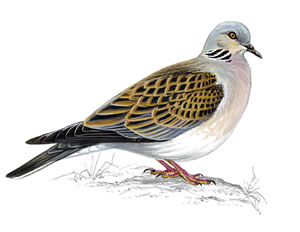
A novel response by Rabbi Bobby Silverman has been to assign a different bird of Israel to each day. The bird pictured above is a Turtle Dove, the kind commonly found in the Sinai Peninsular and in Israel.
For more information see
http://us4.campaign-archive2.com/?u=d76e2f3a6435dec0b480fa8fa&id=2361993a65&e=e6b12d2f52
Or follow my tweets on
This word of Torah is devoted to the Health of Zlata bat Sima
This word of Torah is devoted to the health of Zlata bat Sima
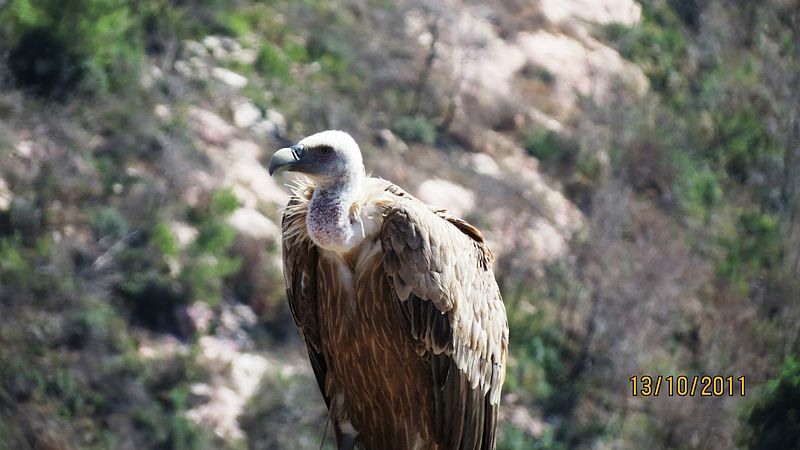
A Griffon Vulture at the Hai Bar Nature Reserve near Haifa
In this week’s Torah Portion we discuss Moses going up Mount Sinai where the Eternal tells Moses to tell the Jewish People their divine purpose; to be a holy nation. He tells Moses to tell the Jewish people that he carried them on the wings of a bird called, in Hebrew, the Nesher.
The King James Bible translates ‘Nesher’ as eagle. This is mostly based in a European tradition identifying the Eagle as ‘The King of Birds’, the Eagle was the symbol of the Roman Empire and the Russian Empire. There is some zoological evidence to suggest that members of the Eagle family carry their children, though generally birds do not do this. However this identification does not fit other Biblical requirements. For instance, the Nesher, according to Micah 1:16 is supposed to be bald. Eagles (except for the American Bald Eagle which is not native to Israel an is not technically bald) do not tend to be bald, Vultures are. Vultures in Ancient Near Eastern folk tradition were associated with kingship. Vultures are also far larger than Eagles and have a larger ability to ‘pick stuff up’. One species, the Lammergeier or ‘Lamb Carrier’ in German, was even rumoured to carry away children.
The Symbolism of the Nesher is that its large wings are supposed to symbolise the eternal protection of the Eternal, know in Hebrew as the Shechinah.
For a more extensive explanation I encourage you to read Rabbi Natan Slifkin’s article on the subject.
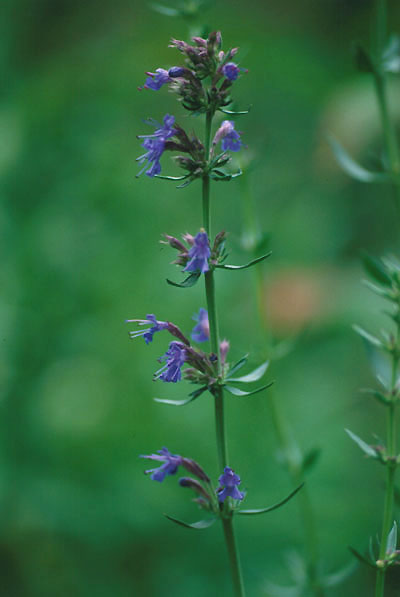 “You Shall take a bunch of Hyssop dip it in the blood in the basket and put it on the Doorpost”
(Shmot / Exodus 12:22)
This Weeks Torah Portion discusses the last of the ten plagues sent against Pharaoh so that the Jewish People could be saved from bondage. The commandment above was set in the context of the plague of the killing of the first born. The Israelites were to smear blood in this manner so that the Angel of Death would pass over their houses.
According to the description of the purity ritual used to resolve Zara’at (translated by the King James incorrectly as leprosy) hyssop was also used. According to Rashi (see just about every post that I’ve made before to find out who he is), Hyssop is the lowliest of plants. So Hyssop is both a symbol of lowliness and purity.
The Rabbis tell us that the Israelites were submerged in 49 levels of ritual impurity when they were saved from Egypt. They also tell us that it was in the merit of their forefathers that they were rescued from slavery. The hyssop warns the Israelites not to think that it is by their own merit that they are being saved but by that of their forefathers. Hyssop is also a symbol of the new status of purity which they will aquire.
I have not written for a while because I became engaged.
The Torah taught in this post is for the Health of Zlata bat Sima
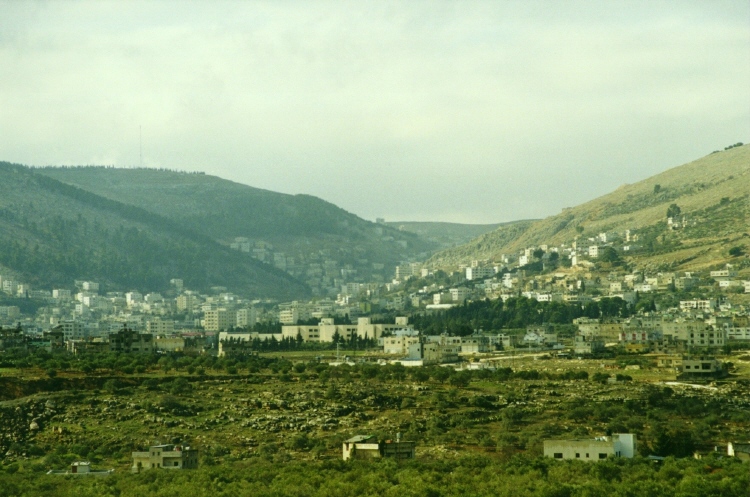
Judah had been working with his brothers on the sheep before he ‘went down’ to become part of another story which eventually ends in him accusing his sister in law of being a prostitute after unknowingly sleeping with her himself. His ‘going down’ is both a spiritual descent and a literal one as the Mountains of Shechem where he was shepherding his sheep are in quite a high mountain range.
This descent is similar to Samson’s descent to Timna (Judges 14:1), both in terms that it was a spiritual descent to marry a philistine woman and an actual descent (Timna is a valley). Also both descents are a necessary descent for some gain. Samson was a ‘thorn in the side’ of the Phillistines, even though he seemed to be involved in their activities, he did this to help the Israelites by causing chaos in the Philistine ranks. Judah’s actions also bore good fruit as the descendent of his actions with his daughter in law was King David, who is seen as a symbol of the Messiah.
This teaches us the concept of: “ירידה לצורך עליה” (Yeridah letsorech aliyah) or a descent that creates an ascent. In Hassidic thought, in particular in the works of Rabbi Nachman of Breslov, eighteenth century Hassidic Master, this is when a person goes through a low spiritual time which ends in a rise and elevation in the person’s spiritual status. Sometimes a person feels far from their spiritual potential, but they must know that a change is coming soon.
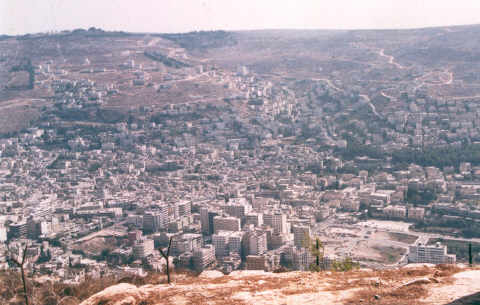
Shechem / Nablus
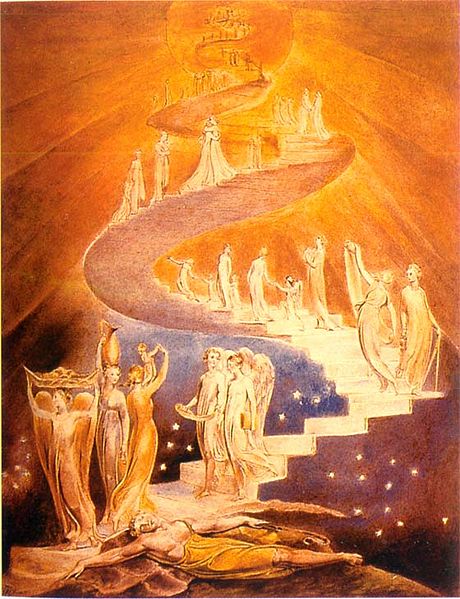
William Blake's painting of Jacob's Ladder
(Genesis (Bereishit) 28:10 -11)
In this week’s Torah portion, when Jacob leaves his parents to escape from his brother’s wrath and find a wife there is a very bizarre episode. He arrived at some un-named place which the hebrew text says he ‘touched’, he then went to sleep and had a fantastical dream where God appears to him promising him saftey and he sees Angels ascending and descending on a ladder to heaven. If this was n’t bizarre enough Rashi the 10th century scholar’s explanation of the text is even more wondrous.
Rashi locates the place as Mount Moriah, the place where Abraham nearly sacrificed Isaac and where the Temple of Solomon was built. This fits in thematically as the Binding of Isaac concerned God’s protection of Abraham and his progeny and the Temple of Solomon was a conduit to heaven as symbolised by the dream.
When Jacob woke up from his dream he says:
‘this is the House of God (or Beit El) and this is the gate of heaven”
(Genesis 28 : 17)
He calls it Beit El, not Mount Moriah, and as we can see on this map, they are at two entirely different places.
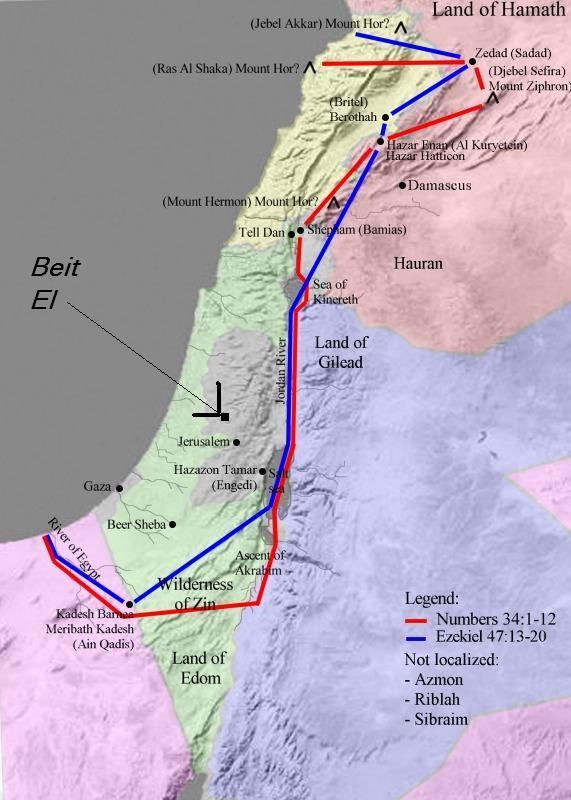
The position of Beit El in comparison to Jerusalem
There are many explanations, some say Beit El is just meant figuratively, the ‘House of God’ means the Temple, not a place called ‘Beit El’ (not likely as the scripture goes to some lengths to tell us its former name; Luz). Possibly it refers to the position of the temporary Temple that existed before the Temple of Solomon or the Tabernacle. This was placed for a long period in Shiloh, just North of Beit El. My favourite explanation is Rashi’s, that the land (and some Rashi scholars say the fabric of the Universe itself) folded or ‘warped’ so that Jerusalem was the same place as Beit El.
In any case in hebrew the word place; ‘HaMakom’ is one of the names of God and reminds us that in every place, no matter how far we may feel we are from God, God is there.